 Rafly
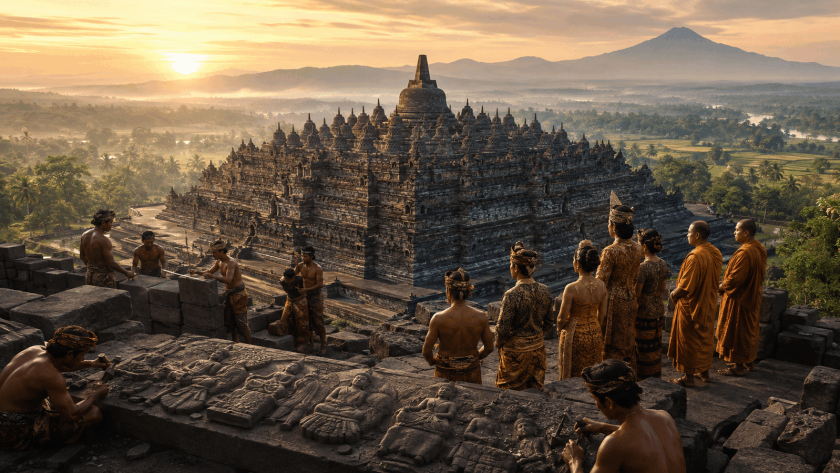
Rafly The Borobudur Temple Ancient Java story reflects the remarkable achievements of Indonesia’s past civilization. Located in Central Java, Borobudur represents the combination of Buddhist philosophy, advanced architecture, and artistic creativity developed during the ancient Javanese period.
Built during the Sailendra Dynasty around the 8th and 9th centuries, Borobudur became one of the greatest Buddhist monuments in Southeast Asia. The temple shows how ancient Java developed sophisticated knowledge in engineering, religion, and cultural expression.
The Origins of Borobudur in Ancient Java
Ancient Java experienced significant cultural growth during the Sailendra Dynasty. Buddhist traditions influenced many aspects of society, including architecture, literature, and religious practices.
Rulers of the Sailendra Dynasty supported the construction of Borobudur as a sacred Buddhist monument. The temple was designed as a spiritual journey that guided visitors toward enlightenment.
The builders selected volcanic stone from the surrounding region. They arranged millions of stone blocks to create terraces, stairways, and detailed structures without modern construction technology.
Visitors can learn more about this historical monument through Borobudur Temple history, origins, rediscovery, restoration, and legacy.
Architecture and Buddhist Symbolism
Borobudur’s design reflects the relationship between ancient Java and Mahayana Buddhist beliefs. The temple consists of three main levels: Kamadhatu, Rupadhatu, and Arupadhatu.
Kamadhatu represents the world of human desires and attachments. Rupadhatu symbolizes the transition toward spiritual understanding. Arupadhatu represents the highest stage of enlightenment.
The monument contains thousands of relief panels and hundreds of stupas. These elements communicate Buddhist teachings and provide information about ancient Javanese culture.
The relief carvings also describe daily activities, social life, and traditions from the ancient Java period. They provide valuable historical evidence about the civilization that created Borobudur.
Borobudur as a Center of Ancient Buddhist Culture
During its active period, Borobudur served as an important Buddhist pilgrimage site. Monks and visitors traveled to the temple for meditation, learning, and spiritual reflection.
The temple was created as more than an architectural structure. It functioned as a symbolic representation of the Buddhist path toward enlightenment.
Pilgrims followed a specific route through the galleries and terraces. They moved upward while observing relief stories that explained Buddhist values and teachings.
Decline and Rediscovery of the Ancient Monument
Over time, Borobudur lost its original religious function due to political and cultural changes in Java. The monument was gradually abandoned and covered by volcanic materials and vegetation.
For centuries, Borobudur remained hidden from wider attention. The temple was rediscovered in the early 19th century and later became the subject of historical research.
Restoration programs helped protect the monument from further damage. International cooperation supported efforts to preserve Borobudur as an important cultural heritage site.
Borobudur’s Legacy in Modern Indonesia
Today, Borobudur represents one of the most important symbols of ancient Java. The monument attracts visitors who want to understand Indonesian history, Buddhist philosophy, and traditional architecture.
Borobudur also demonstrates the creativity of ancient Javanese builders. Its design continues to inspire researchers, architects, and cultural experts around the world.
Travelers who want to experience this ancient masterpiece can join a Borobudur Temple tour to explore its architecture, history, and cultural significance.
Conclusion
The Borobudur Temple Ancient Java heritage represents the achievements of a civilization that combined religion, art, and engineering. From its construction during the Sailendra Dynasty to its preservation today, Borobudur continues to tell the story of ancient Java.
Understanding its history allows visitors to appreciate the temple beyond its physical beauty. Every terrace, relief, and stupa reflects centuries of cultural knowledge and spiritual meaning.